Portcraft layouts and project evidence

TypeScript Developer Portfolio Template

Show TypeScript modeling, runtime validation, and maintainable application boundaries with an Orbit portfolio layout.

Who this portfolio is for

TypeScript developers who want to demonstrate modeling choices, library contracts, and safe handling of untrusted runtime data.

Why choose Orbit?

Orbit provides spacious showcases for contrasting a type model with a real runtime flow, plus a compact area for related experience.

Upload a PDF or DOCX resume, review the extracted content, then choose Orbit from Templates in the builder. This page does not replace your saved design or resume.

  • TypeScript
  • Runtime validation
  • React
  • Testing
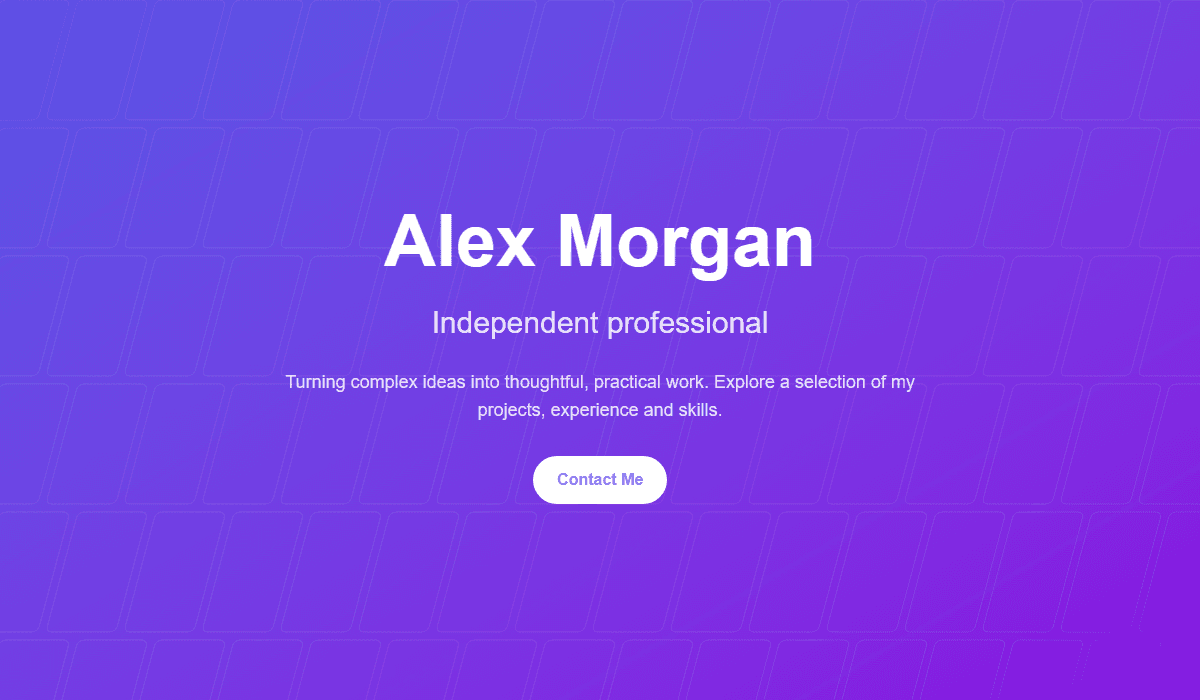
Orbit builder preset with fictional sample content
Actual Orbit layout preview with fictional sample content, not a customer portfolio. This is a free preset; hosted publishing is separate.

Project stories worth including

The following are fictional project ideas, not claims about your experience. Replace them with work you can explain and evidence you are allowed to publish.

Typed API client

A fictional client library that validates external responses and exposes typed success and error results.

Evidence to include

Show malformed-response tests, public usage examples, and why compile-time types alone do not validate network data.

Workflow state model

A fictional review workflow modeled with discriminated unions and explicit allowed transitions.

Evidence to include

Demonstrate an impossible state prevented at compile time and a rejected transition covered by a runtime test.

Review before you publish

  • Connect a type decision to a bug or maintenance problem it prevents.
  • Explain validation at external input boundaries.
  • Include real examples instead of screenshots of a zero-error editor alone.
Read the full portfolio launch checklist →

Technical questions and answers

What makes a TypeScript portfolio more than a skill list?

Show a domain model, a public contract, or a refactor where types improve correctness. Include runtime tests and explain trade-offs rather than treating type coverage as proof of reliability.

Should every project use advanced types?

No. Prefer the simplest types that accurately express the domain. Explain advanced techniques only where they solve a concrete problem without obscuring normal usage.